SECURE LINK FOR OPHTHALMOLOGISTS AND OPTOMETRISTS LAUNCHED
Posted on: July 21, 2026, by : Janice English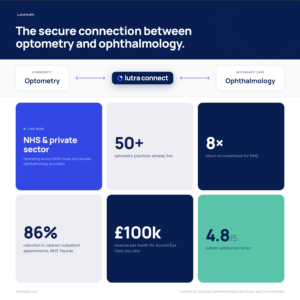
Lutra Connect – the secure platform for optometrists and ophthalmologists – is speeding up access to specialist care and easing the administrative burden for both clinician groups. The ophthalmologist-designed platform champions the growing desire for optometrists and ophthalmologists to collaborate more closely.
Optometrists seeking online confidential advice from vetted specialists, and navigating optimum referrals, are turning to Lutra Connect. It is the progression of a system which has been trialed, and successfully fine-tuned, with 40+ optometry practices and UK health clinics over the past three years.
Developed to fulfill a need by fellow Consultant Ophthalmologists Sam Evans, who specializes in cataract care, and Conor Ramsden, a vitro-retinal specialist, plus their business partner, CEO, Charles Solanki, Lutra Connect is a pathway for:
Clinical Advice
Guidance
Referral
Surgical and post-operative care with structured results for the National Ophthalmic Database
“Ophthalmology remains one of the largest NHS backlogs. Each year we are looking at 700,000 cataract procedures in the UK – it is a colossal task for the profession and needs managing in an accountable and auditable way. With an 18 week referral to treatment waiting time within the NHS but frequently longer in parts of the UK, many patients are accelerating the timing of their care. This single point of secure access is ensuring that private ophthalmology clinics are maximized, ensuring that idle surgeries are something of the past.
“Enhancing the reputation of High Street practices, this rapid access to the highest level of care has resulted in 87% fewer cataract outpatient appointments. The reduction in biometry appointments is particularly significant. Overall, it has reduced administrative and appointment times by at least 25%,” say Lutra Health.
With cataracts – including multi-focal lens exchanges – accounting for the majority of referrals, Lutra Connect is also streamlining the care of glaucoma, AMD and other sub-specialty patients.
The platform removes the current uncertified communication pathways for patient care which may include private Email, disappearing WhatsApp messages and in some cases, fax, in clear breach of the ICO guidance.
Notes:
- UK private cataract surgery admissions increased by approximately 30% in six years: 80,875 in 2025; 77,655 in 2024 and 61,140 in 2019. It is the most common reason for admission to a private hospital (PHIN, June 2026).
- Self-pay private cataract admissions reached 49,655 in 2025, up from 32,040 in 2019, while insured admissions were 31,220. The majority of people are paying privately for cataract surgery rather than through insurance.
- In Scotland alone, more than 9,000 people had private cataract surgery in 2025, around 7,300 of them self-funding (PHIN / STV).
- Cataract care has shifted decisively toward independent providers. Around 60% of NHS-funded cataract surgery is now delivered by independent sector providers, up from under 20% in 2016, on top of the rising private self-pay volume. This fragments the pathway between the site of surgery and community follow-up.
- Glaucoma: a 2026 Moorfields/UCL study estimates around 1 million UK adults aged 40+ are living with glaucoma, well above the previous 700,000 estimate, rising to a projected 1.61 million by 2060. Glaucoma care already accounts for about 20% of hospital eye service workload.
- Macula: nearly 1.5 million people in the UK have macular disease, with age-related macular degeneration the most common, affecting more than 700,000 and the leading cause of sight loss.
Optometry and the post-operative cataract pathway
- Community optometrists already deliver post-operative cataract assessments under local shared-care schemes across Scotland, Wales, London and elsewhere, but provision is a patchwork of local agreements rather than national infrastructure.
- Case study: Where the model has been studied it works well: in a Cambridgeshire scheme, 60.6% of cataract patients were discharged to community optometrists on the day of surgery, with 93.8% of cases having an uneventful recovery and under 3% re-referred.
- RCOphth has flagged the gap directly: with more patients followed up in the community, hospitals are now capturing post-operative outcome data in fewer than two-thirds of cases and the RCOpth has called for robust methods for optometrists to report surgical outcomes. This is the core case for better digital infrastructure connecting optometry and ophthalmology.